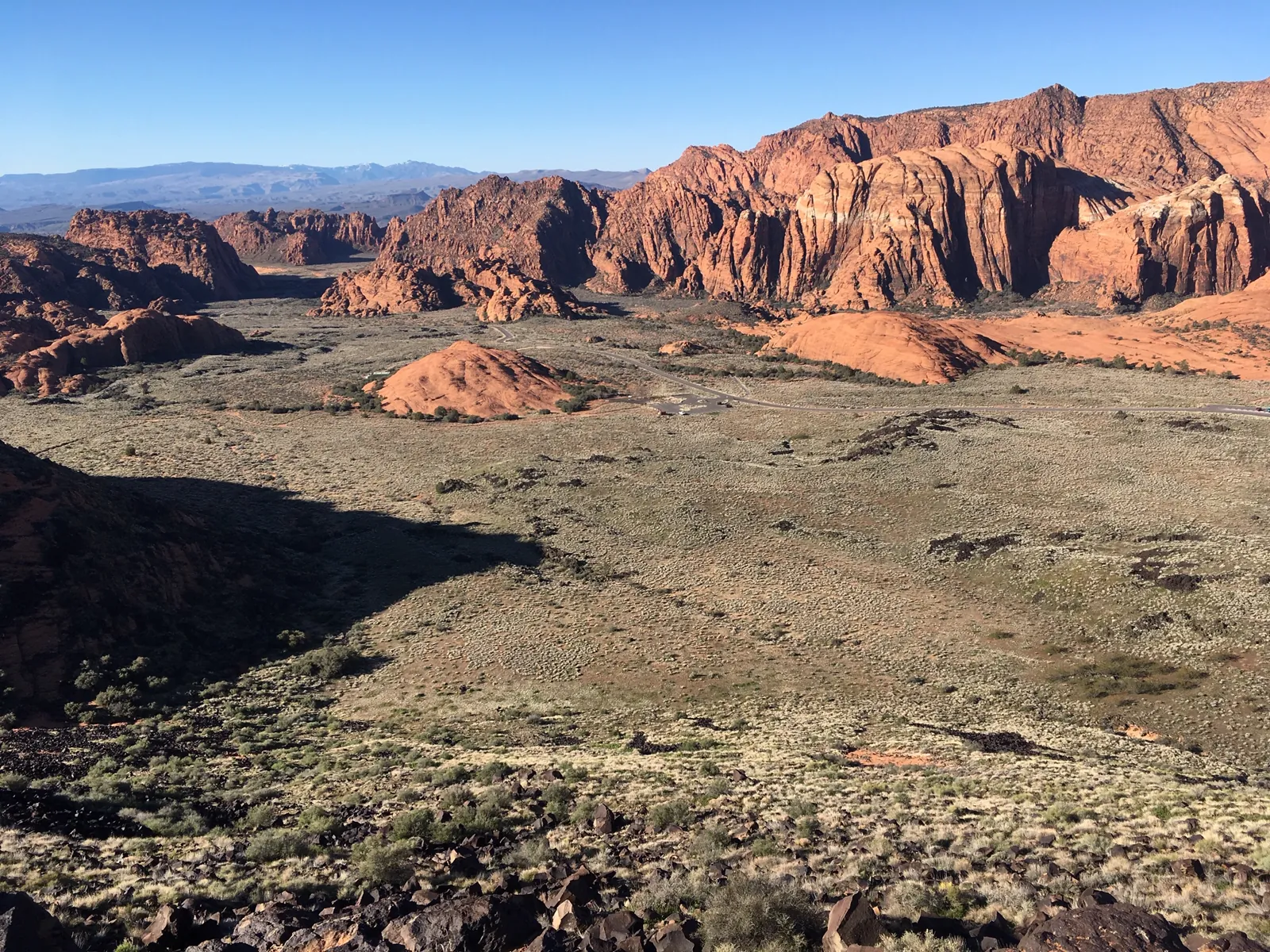

Snow Canyon State Park sits in the Red Cliffs Desert Reserve outside St. George, and Utah State Parks is direct about the climate. Summer daytime temperatures can run from the low 100s into the 117°F range. The current-conditions notes add that July and August frequently top 105°F. Most trails have no shade. A plan that would be fine on a tree-lined path is a bad plan on slickrock at 2 p.m.
The park’s summer rule is a clock, not a vibe. Avoid hiking, biking, and similar effort between 11 a.m. and 7 p.m. The park itself is open 6 a.m. to 10 p.m. daily, so the useful window is the morning, not “whenever we finish breakfast in town.” If you arrive after the heat has built, the park’s own suggestion is a driving tour and a picnic, not a long exposed walk. Snow Canyon Drive is a through-road. A slow drive still shows lava, red sandstone, and the white rock. Save the miles for a cooler hour.
Water is the other hard number, and it comes from the park, not from a gear blog. Every person should drink a minimum of 32 ounces, about one liter, per hour, carry their own bottle, and not wait until they feel thirsty. Dry air hides dehydration. A three-hour walk at that rate is already about three liters per person, and a hotter or hillier hour can ask for more. There is no promise of a tap in the middle of Lava Flow or the Petrified Dunes. Fill before you leave the car. The visitor center sits in the campground, about two miles in from either entrance, which is a place to top off before a trail, not a rescue plan halfway around a loop.
Some links on this page earn us a commission at no extra cost to you.
Clothing matters as much as volume. The park tells visitors to wear a hat and sunscreen and notes that long sleeves block the worst of the sun. Infants, young children, and older adults overheat faster. The park’s alerts say to shorten the day for the youngest and oldest people in the group even if you started early. Salty snacks help replace what you sweat out. They do not replace the water. This is practical planning, not medical advice. If someone stops sweating, gets confused, or cannot keep water down, that is an emergency, not a cue to “push to the overlook.”
Monsoon season, which the park describes as typically July through September, adds flash-flood risk in desert washes after heavy afternoon rain. A clear morning does not cancel a storm later. If thunder is building, get off exposed slickrock and out of narrow drainages. Read current conditions the morning you go. The heat rules and the hourly water figure are also on the main park page. If either page changes a number, believe the park, not this paragraph.
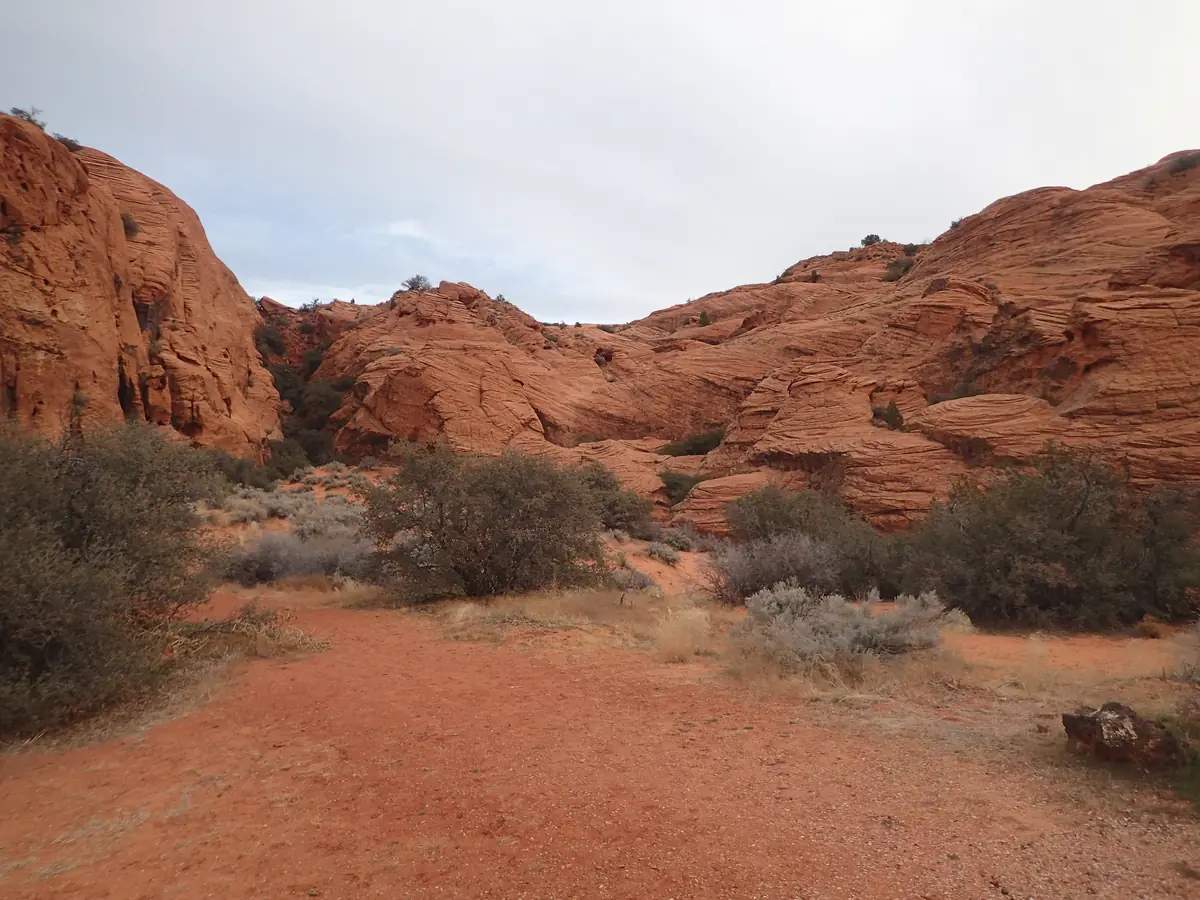
Trail choice should follow the clock. Jenny’s Canyon and Pioneer Names are short, about a half mile each on the park’s hiking list, and they still sit in the sun. Petrified Dunes and Lava Flow feel much longer once the rock is radiating. The paved Whiptail path is a bike-and-walk route, not a shaded tunnel. None of these become “easy” at midafternoon in July because a brochure uses the word easy.
.jpg)
Practical takeaway
In summer, be on the trail near the 6 a.m. opening with at least a liter of water per person for every hour you expect to be out. If you cannot start before 11 a.m., drive and picnic instead of hiking.
Related on this site: Hiking and park tips, day-pack loadout, and a sample trip plan. More guides: guides index.
Quick FAQ
What hours does the park say to avoid in summer?
The park web page says 11 a.m. to 7 p.m. The Sept 2026 brochure says 11 a.m. to 6 p.m. when it is over 95°F. Use the longer window.
How much water should each person carry?
The park says a minimum of 32 ounces (1 liter) per person, per hour, with everyone carrying their own.
Is there shade on the trails?
The park says most trails are fully exposed. Pioneer Names has the most shade of any hike in the park, and it is still short.